Showing posts with label Technical Analysis. Show all posts

Wednesday, February 7, 2018

The Trend is Your Friend !!!


“The trend is your friend” is one of the best known sayings, although it’s message is incomplete. The full version should be, “The trend is your friend, until the end when it bends.” The trick with buying stock is to to be patient through the small changes in price until you can identify the point when the trend makes a change in direction or “bends.”

In this article, we’ll define how to identify a trend and what has to happen for a trend to change. Before we get started, please note that the trend-following methodology should only be applied to stocks with strong fundamental metrics—like strong and improving revenues (sales) and earnings.

What’s a downtrend?

A downtrend is a series of lower highs. At each of those points, sellers are deciding that they have had enough and it is time to get out of the stock. When these sellers perhaps urgently accept lower prices to dispose of their stock, the number (supply) of stocks pressures price lower and helps the trend to continue lower. By a lower high I mean that each new attempt the stock makes to rally and increase in price turns lower before the price gets as high as the previous high.  This is seen in the following chart where the price line spikes upward, but not as high as the prior spike, on the way down.

A Downtrend in Action

If an investor considered to buy this stock during the period shown in the chart, that investor would be buying the stock in a downtrend. There are many ways to lose money in the market, but I think that buying a stock in a down-trending has the highest probability.  Of course the trader wants to be successful in making money.  A smart trader will use trend following as his friend.  He will wait until the trend changes direction with a new higher high price on the chart.  This is the sign of a change from downward to upward trend.
What’s an uptrend?

An uptrend can be defined as a chart with consistently higher lows.  At each higher low, traders are deciding that the pullback in price is a good time to purchase more of the stock. The buying pressure of more and more investors deciding to buy the stock adds more demand and so a higher stock price.  This can be shown on the stock chart as the stock continues to move in an uptrend.

A Change in Trend in Action

As a stock is mired in a downtrend, traders can look back and identify the most recent interim high price where the sellers turned price lower. At this point, I recommend that one consider buying the stock if and only if it goes up above that most recent high price. The current price rising above the most recent high price is what signifies that the trend in price may have changed from down to up.
Key Points
  1.     Trend—a stock’s overall direction—is the second most important technical tool next to Volume.
  2.     It’s when a trend changes that traders should consider potentially entering or exiting a trade.
  3.     To identify a potential change in trend, look to the stock’s Volume and Price Direction —the most important technical tool in my opinion.

If
 you're a trader, make money trading the ST direction - week/ day combo.

If you're an investor, make money investing the LT direction - Year/ Month combo.

Typical traits of intraday moves in uptrend: Gap up, trade down most of the day; recover towards the end of the day.

Typical traits of intraday moves in downtrend: Gap down, trade up most of the day; fall down towards the end of the day.

Kindly Note : All ideas and materials presented herein are for informational and educational purposes only, and is not intended for commercial or trading purposes. Neither does it mean to misguide anyone. Kindly make informed decisions on your own risk. Neither livettcelearn.blogspot.in website nor any of its owner shall be liable for any errors or delays in the content or for any actions taken in reliance thereon.
Read More

Saturday, January 6, 2018

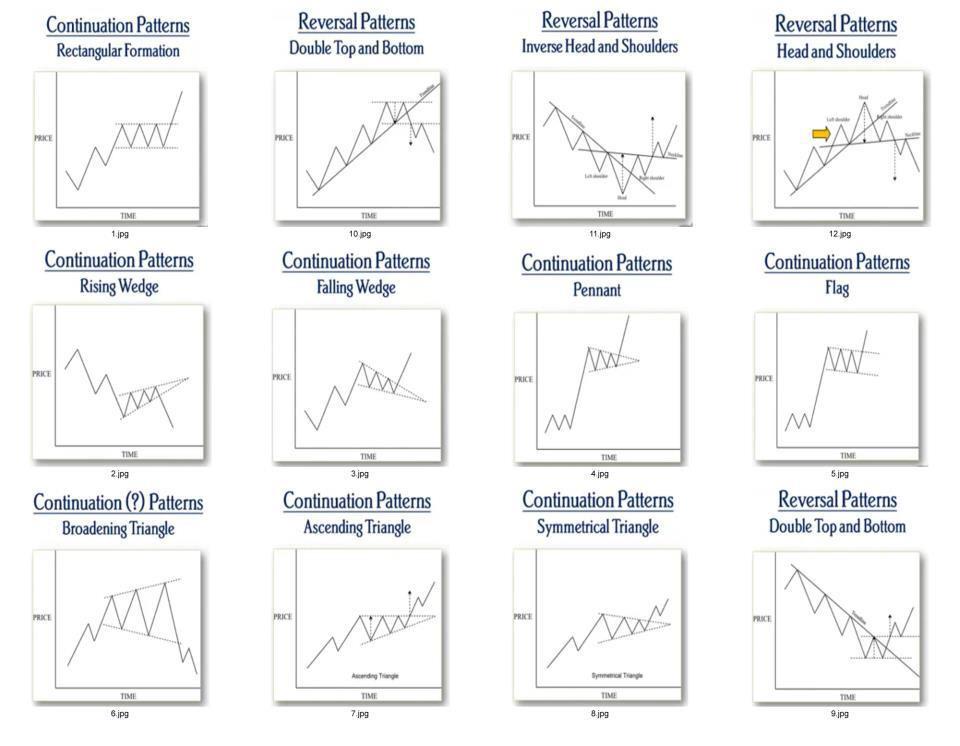
Interesting chart patterns !!!


Kindly Note : All ideas and materials presented herein are for informational and educational purposes only, and is not intended for commercial or trading purposes. Neither does it mean to misguide anyone. Kindly make informed decisions on your own risk. Neither livettcelearn.blogspot.in website nor any of its owner shall be liable for any errors or delays in the content or for any actions taken in reliance thereon.
Read More

Good Reads !!!


Kindly Note : All ideas and materials presented herein are for informational and educational purposes only, and is not intended for commercial or trading purposes. Neither does it mean to misguide anyone. Kindly make informed decisions on your own risk. Neither livettcelearn.blogspot.in website nor any of its owner shall be liable for any errors or delays in the content or for any actions taken in reliance thereon.

Read More

Saturday, December 16, 2017

FIBONACCI RETRACEMENT LEVELS & FIBONACCI PROFIT TARGETS...


Kindly Note : All ideas and materials presented herein are for informational and educational purposes only, and is not intended for commercial or trading purposes. Neither does it mean to misguide anyone. Kindly make informed decisions on your own risk. Neither livettcelearn.blogspot.in website nor any of its owner shall be liable for any errors or delays in the content or for any actions taken in reliance thereon.
Read More

Wednesday, December 13, 2017

Trading 212 Trading Strategies: How to Trade Moving Averages (Part 2)


Kindly Note : All ideas and materials presented herein are for informational and educational purposes only, and is not intended for trading purposes. Kindly make informed decisions on your own risk.
Neither livettcelearn.blogspot.in website nor any of its owner shall be liable for any errors or delays in the content or for any actions taken in reliance thereon.
Read More

Trading 212 Trading Strategies: How to Trade Moving Averages (Part 1)

Kindly Note : All ideas and materials presented herein are for informational and educational purposes only, and is not intended for trading purposes. Kindly make informed decisions on your own risk. Neither livettcelearn.blogspot.in website nor any of its owner shall be liable for any errors or delays in the content or for any actions taken in reliance thereon.
Read More

10 Trading Strategy By Ashwani Gujral

10 trading strategies from Ashwani Gujral's book called "How to Make Money Trading Derivatives" from rediff.com. Here we go...

Unlike investors who need markets to move up in order to profit from their investment, traders don't depend only on bull markets. They can profit even in down trends. 

This is a crucial advantage traders enjoy over investors -- the ability to make money whether the market is moving up or down. This fact should not, however, lead you to believe that trading is easy; it requires both a skill-set and rigorous discipline.

Many people take to trading in the mistaken belief that it is the simplest way of making money. Far from it, I believe it is the easiest way of losing money. There is an old Wall Street adage, that 'the easiest way of making a small fortune in the markets is having a large fortune'.

This game is by no means for the faint hearted. And, this battle is not won or lost during trading hours but before the markets open but through a disciplined approach to trading.

1. Always have a trading plan

Winning traders diligently maintain charts and keep aside some hours for market analysis. Every evening a winning trader updates his notebook and writes his strategy for the next day. Winning traders have a sense of the market's main trend. They identify the strongest sectors of the market and then the strongest stocks in those sectors. They know the level they are going to enter at and approximate targets for the anticipated move.

For example, I am willing to hold till the market is acting right. Once the market is unable to hold certain levels and breaks crucial supports, I book profits. Again, this depends on the type of market I am dealing with.

In a strong up trend, I want the market to throw me out of a profitable trade.

In a mild up trend, I am a little more cautious and try to book profits at the first sign of weakness.

In a choppy market, not only do I trade the lightest, I book profits while the market is still moving in my direction.

Good technical traders do not worry or debate about the news flow; they go by what the market is doing.

2. Avoid overtrading

Overtrading is the single biggest malaise of most traders. A disciplined trader is always ready to trade light when the market turns choppy and even not trade if there are no trades on the horizon. 

For example, I trade full steam only when I see a trending market and reduce my trading stakes when I am not confident of the expected move. I reduce my trade even more if the market is stuck in a choppy mode with very small swings. 

A disciplined trader knows when to build positions and step on the gas and when to trade light and he can only make this assessment after he is clear about his analysis of the market and has a trading plan at the beginning of every trading day.

3. Don't get unnerved by losses

A winning trader is always cautious; he knows each trade is just another trade, so he always uses money management techniques. He never over leverages and always has set-ups and rules which he follows religiously. 

He takes losses in his stride and tries to understand why the market moved against him. Often you get important trading lessons from your losses.

4. Try to capture the large market moves
Novice traders often book profits too quickly because they want to enjoy the winning feeling. Sometimes even on the media one hears things like, "You never lose your shirt booking profits." I believe novice traders actually lose their account equity quickly because they do not book their losses quickly enough.

Knowledgeable traders on the other hand, will also lose their trading equity -- though slowly -- if they are satisfied in booking small profits all the time. By doing that the only person who can grow rich is your broker. And this does happen because, inevitably, you will have periods of drawdowns when you are not in sync with the market. You can never cover a 15-20% drawdown if you keep booking small profits. The best you will do is be at break even at the end of the day, which is not the goal of successful trading.

A trading account that is not growing is not sustainable. Thus when you believe you have entered into a large move, you need to ride it out till the market stops acting right. Traders with a lot of knowledge of technical analysis, but little experience, often get into the quagmire of following very small targets, believing the market to be overbought at every small rise -- and uniformly so in all markets. 

Such traders are unable to make money because they are too smart for their own good. They forget to see the phase of the market. Not only do these traders book profits early, sometimes they even take short positions believing that a correction is "due". Markets do not generally correct when corrections are "due". 

The best policy is to use a trailing stop loss and let the market run when it wants to run. The disciplined trader understands this and keeps stop losses wide enough so that he is balanced between staying in the move as well as protecting his equity. Capturing a few large moves every year is what really makes worthwhile trading profits.

5. Always keeps learning

You cannot learn trading in a day or even a few weeks, sometimes not even in months. Successful traders keep reading all the new research on technical analysis they can get their hands on. They also read a number of books every month about techniques, about trading psychology and about other successful traders and how they manage their accounts. 

I often like to think about traders as Passionate ; unless there is a fire in the belly, unless there is a strong will and commitment to win, it is impossible to win consistently in the market.

6. Always be alert to opportunities of making some money with less risky strategies as well

Futures trading, for example, is a very risky business. The best of chartists and the best of traders sometimes fail. Sure, it gives the highest returns but these may not be consistent -- and the draw downs can be large. 

Traders should always remember that no matter how good your analysis is, sometimes the market is not willing to oblige. In such times the 4-5% that can be earned in covered calls or futures and cash arbitrage comes in very handy. It improves the long term sustainability of a trader and keeps your profit register ringing. 

Traders must learn to live with lower risk and lower return at certain times in the market, in order to protect and enlarge their capital.

Disciplined traders have reasonable risk and return expectations and are open to using less risky and less exciting strategies of making money, which helps them tide over rough periods in the markets.

7. Treat trading as a business and keep a positive attitude
Trading can be an expensive adventure sport. It should be treated as a business and should be very profit oriented. Successful traders review their performance at regular intervals and try to identify causes of both superior and inferior performance. 

The focus should be on consistent profits rather than erratic large profits and losses. Also, trading performance should not be made a judgment on an individual; rather, it should be considered a consequence of right or wrong actions.

Disciplined traders are able to identify when they are out of sync with the market and need to reduce position size, or keep away altogether. Successful trading is like dancing in rhythm with the market. 

Unsuccessful traders often cut down on all other expenses but refuse to see what might be wrong with their trading methods. Denial is a costly attitude in trading. If you see that a particular trade is not working the way you had expected, reduce or eliminate your positions and see what is going on. 

Most disciplined and successful traders are very humble. Humility is a virtue that traders should learn on their own, else the market makes sure that they do. Ego and an "I can do no wrong"attitude in good times can lead to severe draw downs in the long term.

Also, bad days in trading should be accepted as cheerfully as the good ones. So disciplined traders maintain composure whether they have made a profit or not on a particular day and avoid mood swings. 

A good way to do this is to also participate in activities other than trading and let the mind rest so that it is fresh for the next trading day.

8. Never blame the market for your reverses
Disciplined traders do not blame the market, the government, the companies or anyone else, conveniently excluding themselves, for their losses. The market gives ample opportunities to traders to make money. It is only the trader's fault if he fails to recognise them. 

Also, the market has various phases. It is overbought sometimes and oversold at other times. It is trending some of the time and choppy at others. It is for a trader to take maximum advantage of favourable market conditions and keep away from unfavourable ones. 

With the help of derivatives, it is now possible to make some money in all kinds of markets. So the trader needs to look for opportunities all the time.

To my mind, the important keys to making long term money in trading are:

Keeping losses small. Remember all losses start small.

-->Ride as many big moves as possible.
-->Avoid overtrading.
-->Never try to impose your will on the market.
-->It is impossible to practice all of the above perfectly. However, if you can practice all of the above with some degree of success, improvement in trading performance can be dramatic.


9. Keep a cushion

If new traders are lucky to come into a market during a roaring bull phase, they sometimes think that the market is the best place to put all one's money. But successful and seasoned traders know that if the market starts acting differently in the future, which it surely will, profits will stop pouring in and there might even be periods of losses.

So do not commit more than a certain amount to the market at any given point of time.Take profits from your broker whenever you have them in your trading account and stow them away in a separate account. 

I say this because the market is like a deep and big well. No matter how much money you put in it, it can all vanish. So by having an account where you accumulate profits during good times, it helps you when markets turn unfavorable.

This also makes draw downs less stressful as you have the cushion of previously earned profits. Trading is about walking a tightrope most times. Make sure you have enough cushion if you fall.

10. Understand that there is no holy grail in the market

There is no magical key to the Indian or any other stock market. If there were, investment banks that spend billions of dollars on research would snap it up. Investing software and trading books by themselves can't make you enormously wealthy. 

They can only give you tools and skills that you can learn to apply. And, finally, there is no free lunch; every trading penny has to be earned. I would recommend that each trader identify his own style, his own patterns, his own horizon and the set-ups that he is most comfortable with and practice them to perfection. 

You need only to be able to trade very few patterns to make consistent profits in the market.

No gizmos can make a difference to your trading. There are no signals that are always 100% correct, so stop looking for them. 

Focus, instead, on percentage trades, trying to catch large moves and keeping your methodology simple. What needs constant improving are discipline and your trading psychology. 

Bottom line:

At end of the day, money is not made by how complicated-looking your analysis is but whether it gets you in the right trade at the right time. Over-analysis can, in fact, lead to paralysis and that is death for a trader. If you can't pull the trigger at the right time, then all your analysis and knowledge is a waste.


Kindly Note : All ideas and materials presented herein are for informational and educational purposes only, and is not intended for trading purposes. Kindly make informed decisions on your own risk.

 Neither livettcelearn.blogspot.in website nor any of its promoters shall be liable for any errors or delays in the content or for any actions taken in reliance thereon.


Read More

Tuesday, August 5, 2014

Point and Figure Analysis


Point and Figure Analysis 
Point and Figure is an age old charting technique that does plot time and volume. It only plots price in tabular form with column of Xs for the rise and price and column of Os for the fall.
P&F Patterns
Double Top Buy Signal
 
Double Top Buy signal is a bullish pattern where current column of ‘X’ goes above previous column of ‘X’
Double Bottom Sell Signal
 
Double Bottom Sell signal is a bearish pattern where current column of ‘O’ goes below previous column of ‘O’
Triple Top Buy Signal
Triple Top Buy signal is a Five column bullish pattern where third column of ‘X’ breaks above prior two columns of ‘X’ with equal reaction highs
Triple Bottom Sell Signal
Triple Bottom Sell is a Five column bearish pattern where third columns of ‘O’ breaks below prior two columns of ‘O’ with equal reaction lows
Catapult Buy Signal
 
Catapult Buy is a seven columns bullish pattern where Double Top Buy signal occurs immediately after Triple Top Buy signal
Catapult Sell Signal
Catapult Sell Signal is a seven columns bearish pattern where Double Bottom Sell signal occurs immediately after Triple Bottom Sell signal
Bull Trap
Bull Trap is a four columns bearish pattern where Double Bottom Sell pattern is occurred immediately after Double top buy pattern
Bear Trap
Bear Trap is a four columns bullish pattern where Double Top buy pattern occurs immediately after Double Bottom sell pattern
Bullish Broadening Pattern
 
Bullish Broadening is a five column bullish pattern where Double Top Buy pattern occurs immediately after Bull Trap pattern. It actually becomes Bear Trap followed by Bull Trap
Bearish Broadening Pattern
Bearish Broadening is a five columns bearish pattern where Double Bottom Sell pattern occurs immediately after Bear Trap pattern. It actually becomes Bull Trap followed by Bear Trap
High Pole
High Pole is a bearish reversal pattern where long column of ‘X’ is been retraced by next column of ‘O’ by more than 50%
Low Pole
Low Pole is a bullish reversal pattern where long column of ‘O’ is been retraced by next column of ‘X’ by more than 50%
Double Top Buy after Support
 

Double Top Buy after support is a five column bullish pattern where Double Top buy pattern occurs after consecutive columns of ‘O’ confirmed the support at the same level
Double Bottom Sell after Resistance
Double Bottom Sell after resistance is a five column bearish pattern where Double Bottom Sell pattern occurs after consecutive columns of ‘X’ confirmed the resistance at the same level
Rising Bottom Double Top Buy
Rising Bottom Double Top Buy is another variation of Double Top Buy Pattern where Double Top buy signal occurs when bottom of previous column of ‘O’ is a rising bottom
Falling Top Double Bottom Sell Signal
Falling Top Double Bottom Sell is another variation of Double Bottom Sell Pattern where Double Bottom Sell signal occurs when top of previous column of ‘X’ is a falling top
Rising Bottom Triple Top Buy
Rising Bottom Triple Top Buy generates Triple Top buy signal when bottom of previous column of ‘O’ is a rising bottom
Falling Top Triple Bottom Sell Signal

Falling Top Triple Bottom Sell generates Triple Bottom Sell signal when top of previous column of ‘X’ is a falling top
Diagnoal Triple Top
Diagonal Triple Top is a five columns bullish pattern where Double Top buy pattern occurs immediately after Double Top Buy pattern provided previous column of ‘O’ has not generated Double Bottom Sell Signal
Diagnoal Triple Bottom
Diagonal Triple Bottom is a five columns bearish pattern where Double Bottom Sell pattern occurs immediately after Double Bottom Sell pattern provided previous column of ‘X’ has not generated Double Top Buy Signal
Bearish Pattern that Reversed
Bearish Pattern that reversed is a seven columns bullish pattern where Double Top buy signal occurs after series of falling tops & bottoms
Bullish Pattern that Reversed
Bullish Pattern that reversed is a seven columns bearish pattern where Double Bottom Sell signal occurs after series of rising tops & bottoms
Bull Trap Variation
Bull Tap variation is a six columns bearish pattern where Double Bottom sell signal occurs when previous column of ‘X’ has failed to rise above its previous column of ‘X’ which is a Double Top Buy pattern
Bear Trap Variation
Bear Trap variation is a six columns bullish pattern where Double Top buy signal occurs when previous column of ‘O’ has failed to fall below its previous column of ‘O’ which is a Double Bottom sell pattern
Long Tail down
Long Tail down is a column of ‘O’ with 20 or more boxes
Long Tail up
Long Tail up is a column of ‘X’ with 20 or more boxes

Read More
Powered By Blogger And Premium Template By Lord HTML